The Housemaid books in order. Complete reading guide to Freida McFadden’s series

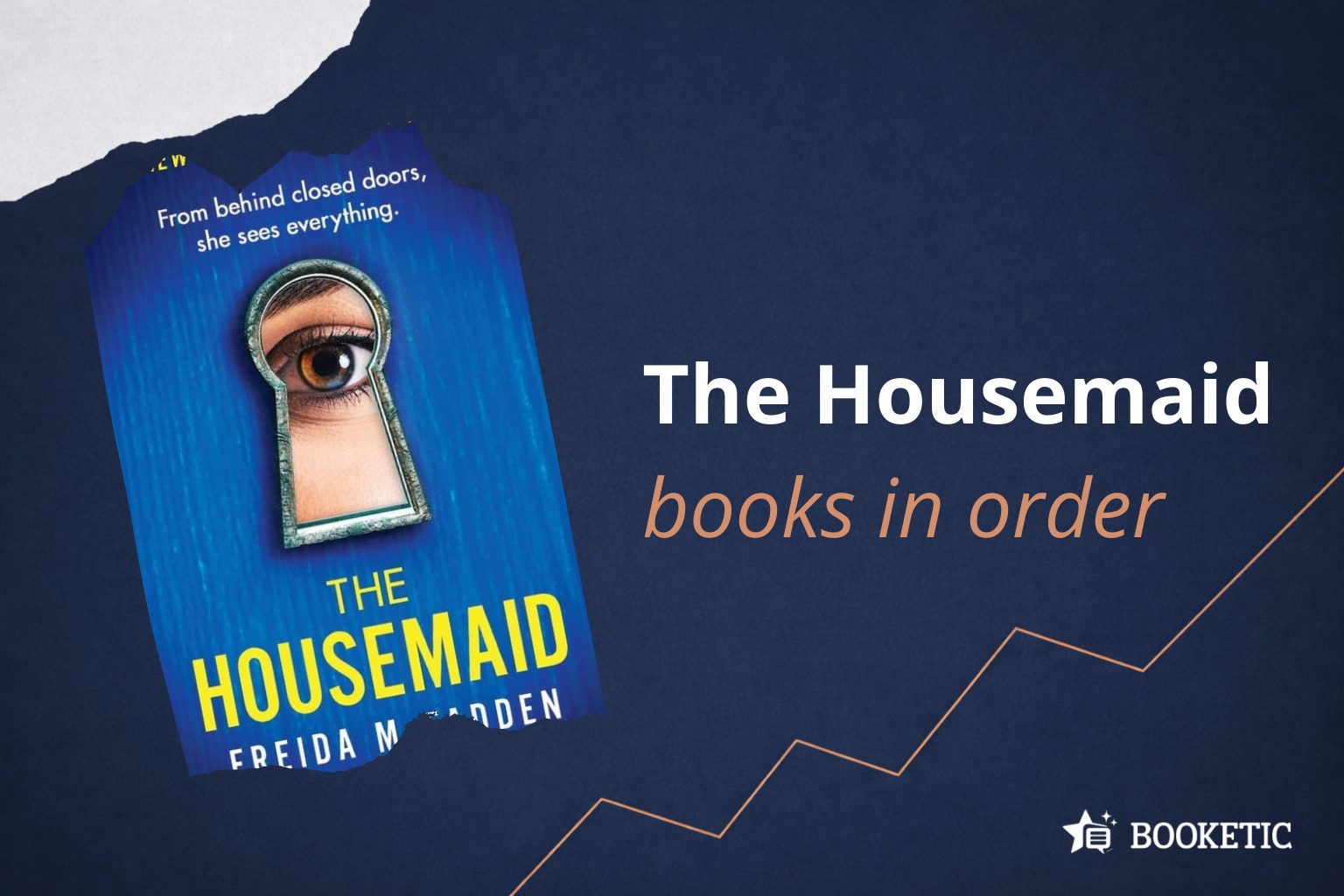
The The Housemaid series by Freida McFadden is a psychological thriller saga centered on Millie Calloway, a woman whose attempts to rebuild her life repeatedly pull her into disturbing domestic secrets, power imbalances, and moral gray zones.
Unlike large family sagas or fantasy cycles, The Housemaid is a tight, linear thriller series. The books are designed to be read in strict order, as later installments rely heavily on revelations, character development, and consequences from earlier volumes.
What is the official order to read The Housemaid books?
The correct and recommended reading order is the publication order, which also matches the internal chronology of Millie’s story:
- The Housemaid (2022)
- The Housemaid’s Secret (2023)
- The Housemaid Is Watching (2024)
This order is confirmed by publisher listings and reading guides, including Lifestyle Asia, and should not be altered if you want to avoid major spoilers.
Book-by-book overview (spoiler-free)
1. The Housemaid (2022)
The opening novel introduces Millie Calloway, recently released from prison and desperate for a fresh start. She accepts a live-in housemaid job for a wealthy family—only to discover that the real danger in the house is not where she expected.
This book establishes:
- Millie’s psychological profile
- Her past trauma and moral code
- The series’ core theme: power dynamics behind closed doors
It is essential reading and cannot be skipped.
2. The Housemaid’s Secret (2023)
The second installment expands Millie’s world and raises the stakes. While still structured as a domestic thriller, it leans more heavily into:
- manipulation,
- hidden identities,
- long-term consequences of earlier choices.
Crucially, this novel assumes full knowledge of the first book’s ending. Reading it standalone would significantly weaken the impact and clarity of the story.
3. The Housemaid Is Watching (2024)
The third book shifts perspective slightly, focusing on surveillance, paranoia, and the idea that no one ever truly escapes their past. Millie is no longer just reacting to danger—she is anticipating it.
This volume:
- completes major character arcs,
- recontextualizes earlier events,
- functions as a thematic culmination rather than a reset.
Skipping earlier books makes this one largely incomprehensible.
Where does The Housemaid’s Wedding fit in the reading order?
The Housemaid’s Wedding is a short story by Freida McFadden that functions as a narrative bridge between The Housemaid’s Secret and The Housemaid Is Watching.
Although it is sometimes overlooked due to its length, this novella plays an important structural role in the series and is best read after book two and before book three.
The Housemaid’s Wedding (2024 – short story)
Length: 59 pages
Recommended position:
- The Housemaid
- The Housemaid’s Secret
→ The Housemaid’s Wedding - The Housemaid Is Watching
What is it about? (spoiler-free)
Millie and Enzo are preparing to formalize their relationship and finally claim a sense of stability and happiness. However, true to the tone of the series, that sense of safety is fragile. Someone from the shadows is determined to ensure that Millie does not get the ending she believes she has earned.
Rather than introducing a new mystery, this story focuses on:
- unresolved tension from previous books,
- emotional vulnerability rather than shock twists,
- the cost of happiness for someone with Millie’s past.
Is The Housemaid a standalone series or an ongoing saga?
This is where some readers get confused.
Formally, The Housemaid books are marketed as psychological thrillers that can stand alone in terms of plot structure. Practically, however:
- character knowledge carries forward,
- emotional weight depends on prior events,
- major twists lose effectiveness out of order.
So while each book has its own central mystery, this is not an anthology. It is a continuous character-driven series.
Are there spin-offs or related books in the same universe?
As of now, there are no official spin-offs or prequels directly connected to The Housemaid series. Freida McFadden has written many other psychological thrillers, but they are separate universes with no narrative crossover.
If a future installment or spin-off is announced, it will almost certainly require familiarity with Millie’s full story.
Why publication order matters in this series
Reading The Housemaid books out of order will:
- spoil major plot twists retroactively,
- flatten Millie’s psychological evolution,
- remove suspense that relies on reader knowledge.
Unlike romance series (where couples change) or crime procedurals (where cases reset), this series is built on accumulating tension and memory. Publication order is not just recommended—it’s structurally necessary.
Can I start with The Housemaid’s Secret or The Housemaid Is Watching?
Technically possible. Narratively unwise.
You would miss:
- the moral ambiguity that defines Millie,
- the emotional logic behind her decisions,
- the significance of returning threats.
If you care about psychological realism rather than just surface-level twists, start at book one.
FAQ – The Housemaid reading order
Where should I start reading The Housemaid series?
Start with The Housemaid (2022). It introduces Millie Calloway and establishes every major thematic and psychological element used later.
How many books are in The Housemaid series?
Currently three: The Housemaid, The Housemaid’s Secret, and The Housemaid Is Watching.
Do the books have to be read in order?
Yes. Despite marketing language suggesting standalone thrillers, the series relies on cumulative storytelling.
Is The Housemaid series finished?
As of now, the third book reads like a strong thematic conclusion, but Freida McFadden has not definitively closed the door on future installments.
Are the books connected to any TV or film adaptation?
At present, there is no released screen adaptation. If that changes, expect deviations from book order similar to other thriller adaptations.
Bottom line
If you want the full psychological impact of The Housemaid series, read it once, in order, without skipping. This is a tightly engineered thriller narrative where memory is part of the suspense—and forgetting the past is exactly what the story warns against.
A University of Chicago graduate based in the U.S. with Polish roots. A lifelong book lover drawn to long, immersive stories and worlds worth returning to. Often rereads favorite passages instead of finishing new books and usually has at least one half-finished novel nearby. The Dark Tower remains a constant literary reference point.