30+ Reading Statistics & Trends [2026]

Reading remains a widespread activity, but the amount of time people spend reading and the formats they choose have changed significantly over the past decade.
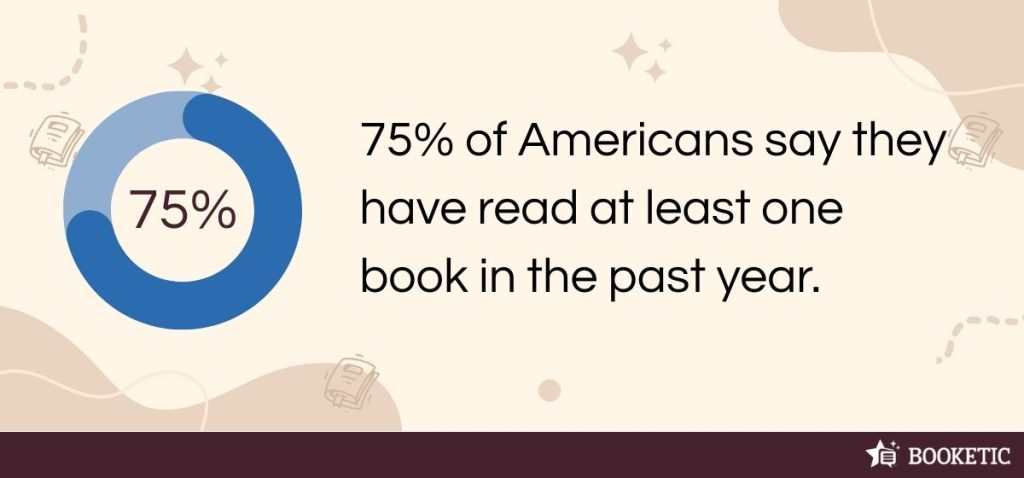
In the United States, 75 percent of adults reported reading at least one book in 2023, while only 48 percent read a printed book, reflecting a gradual shift toward digital formats.
At the same time, international data shows that reading proficiency among 15 year olds has declined in many high income countries since 2018, raising concerns about long term reading habits and skills.
Together, these figures show a clear divide between reading as a leisure activity among adults and reading ability and engagement among younger populations.
Key reading statistics
- Only about one third of children and young people (32.7%) enjoy reading in their free time in 2025, the lowest level since tracking began.
- Just 18.7% of youth aged 8 to 18 read something daily, showing a sharp drop in regular reading habits.
- In the United States, 40% of adults did not read a single book in 2025, while 60% did read at least one book.
- Among U.S. adults who did read in 2025, 27% read 1–4 books and only a small group (about 19%) read 10 or more.
- Median books read by Americans in 2025 was just two, even though the average is pulled up by heavy readers.
- Americans spend about 7 hours per week (357 hours per year) reading, one of the highest rates globally.
- Reading for pleasure in the U.S. has fallen by more than 40% over the past two decades, with daily leisure reading dropping from about 28% to 16%.
- In Spain, nearly 65% of the population reports reading at least one book yearly, with a majority preferring print formats and most reading in their free time.
- A majority of UK adults (55%) say they read less than they plan to, indicating a gap between desire and actual reading habits.
- Basic literacy remains widespread globally, with more than 95% of adults in many countries being literate; however an estimated 754 million adults worldwide still lack basic literacy skills, with two-thirds of them women.
How many adults read books in the United States?
The most frequently cited data on adult reading behavior in the U.S. comes from Pew Research Center.
According to Pew’s 2023 survey on reading formats, 75 percent of American adults said they had read at least one book in the past 12 months. This includes print books, ebooks, and audiobooks. The remaining 25 percent reported not reading any books during that period.
Among those who did read, the median number of books read was 12, meaning half of readers finished fewer than 12 books and half finished more. This distribution highlights that frequent readers account for a disproportionate share of total books read.
What reading formats do adults use most?
Print remains the most common format, but its dominance has weakened.
In 2023:
- 48 percent of U.S. adults read at least one printed book
- 30 percent read at least one ebook
- 23 percent listened to at least one audiobook
These categories overlap. Many respondents reported using more than one format during the year, indicating that reading behavior is increasingly format flexible rather than format exclusive.
The long term trend shows gradual decline in print reading paired with steady growth in audio consumption, particularly among adults under 50.
How often do people read globally?
Global comparisons rely on broader cultural surveys rather than book specific questionnaires.
According to data summarized by UNESCO and OECD, approximately 60 to 65 percent of adults worldwide report reading books or long form texts at least occasionally. However, the frequency varies widely by region, education level, and access to formal schooling.
In high income countries, reading for pleasure is more common, while in lower income regions reading is more strongly associated with education and work related needs.
What do reading statistics show about children and students?
Reading proficiency data for children comes primarily from standardized assessments rather than self reported behavior.
The OECD Programme for International Student Assessment (PISA) measures reading literacy among 15 year olds. Results from the 2022 PISA cycle show that average reading scores declined in the majority of participating countries compared to 2018.
Several consistent patterns appear in the data:
- Girls score higher than boys in reading in every OECD country
- Students from higher socioeconomic backgrounds score significantly higher than peers
- Time spent reading for enjoyment is strongly correlated with higher scores
In many countries, the share of students who report not reading for pleasure at all has increased since 2012.
How much time do people spend reading?
Time use surveys provide additional context beyond book counts.
In the United States, data from the Bureau of Labor Statistics American Time Use Survey shows that adults spend an average of 16 to 18 minutes per day reading for personal interest. This figure has remained relatively stable since 2015, despite changes in reading formats.
In contrast, time spent on digital media and video content has increased substantially, suggesting that reading competes directly with other forms of leisure rather than disappearing entirely.
Reading statistics by country
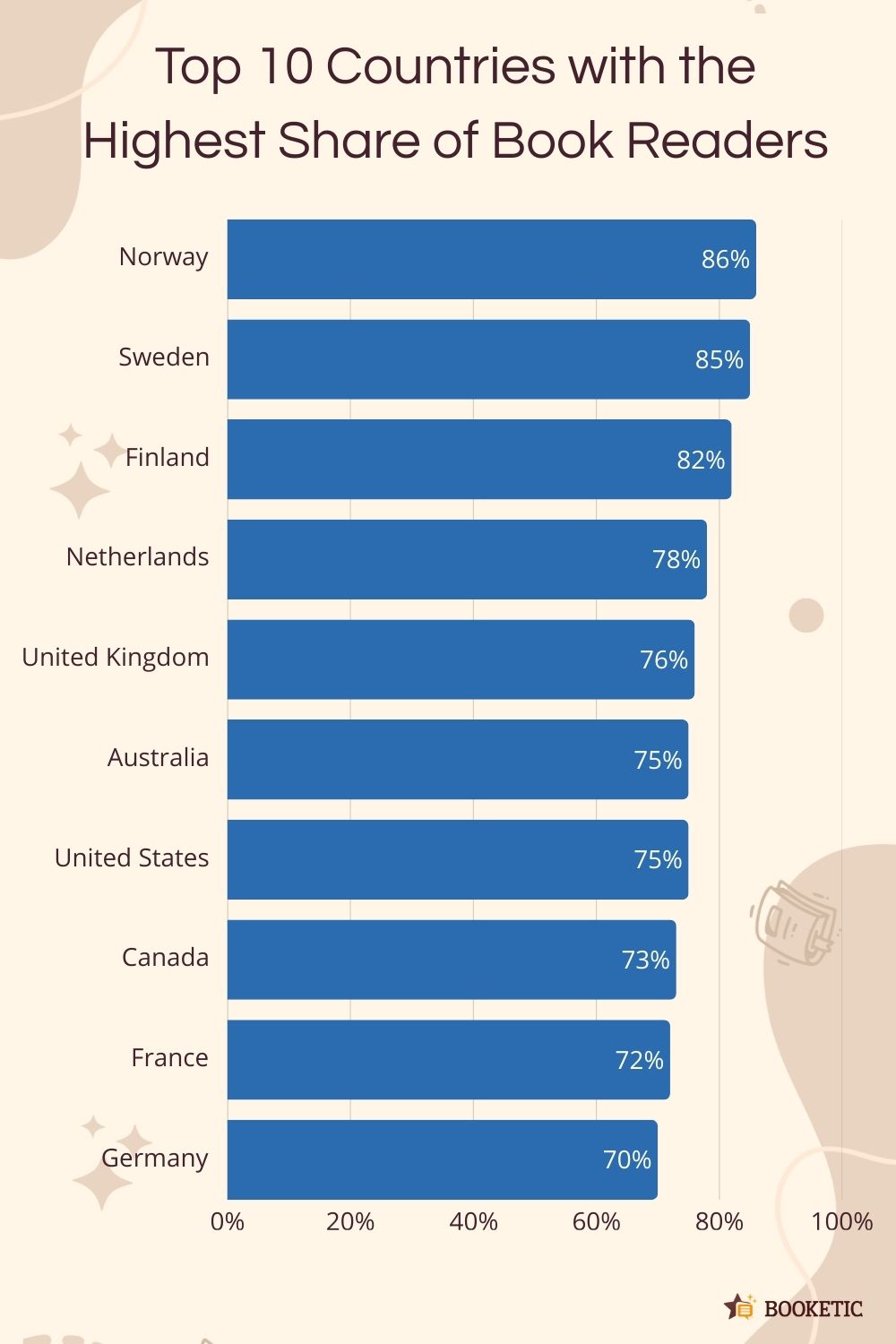
Share of adults who report reading books at least occasionally
| Country | Adults who read books | Source |
|---|---|---|
| United States | 75 percent | Pew Research Center |
| United Kingdom | 74 to 76 percent | YouGov |
| Canada | 71 to 73 percent | BookNet Canada |
| Germany | 68 to 70 percent | Statista, Börsenverein |
| France | 68 to 72 percent | Centre National du Livre |
| Spain | 64 to 66 percent | Ministerio de Cultura |
| Italy | 59 to 61 percent | ISTAT |
| Netherlands | 76 to 78 percent | Dutch Cultural Surveys |
| Sweden | 80 to 85 percent | Nordic cultural surveys |
| Norway | 82 to 86 percent | Statistics Norway |
| Finland | 78 to 82 percent | Finnish Reading Studies |
| Poland | 60 to 63 percent | Biblioteka Narodowa |
| Japan | 67 to 69 percent | Agency for Cultural Affairs |
| South Korea | 62 to 65 percent | Ministry of Culture, Sports and Tourism |
| Australia | 73 to 75 percent | Australia Council for the Arts |
While definitions of “reading” vary slightly, the pattern is consistent: countries with strong education systems and public library access report higher participation rates.
Sources
- Pew Research Center, Who doesn’t read books in America?
- Pew Research Center, Book reading 2016–2023
- OECD, PISA 2022 Results Volume I: The State of Learning and Equity in Education
- UNESCO Institute for Statistics, Reading and literacy statistics
- U.S. Bureau of Labor Statistics, American Time Use Survey Summary
- YouGov, Book reading habits in the UK
A writer who loves books, travel, and finding stories hidden in data. While writing is her main passion, her interest in numbers led her to focus on data-driven content. Her work has appeared in Forbes, CNN, Travel + Leisure, and Yahoo. The Little Prince is her all-time favorite, with the Harry Potter series close behind.